Funny Dog Font: Playful Branding for Small Businesses
When I first started my handmade candle business from a spare room in my apartment, I didn't think much about fonts. I picked whatever looked cute in the moment, tossed it onto a label template, and called it a day. The result was a brand that felt scattered. One week my packaging looked whimsical. The next week it looked vague and forgettable. Customers didn't recognize my products when they saw them again. That experience taught me something valuable: a single, well-chosen typeface can carry an entire small business identity on its shoulders.
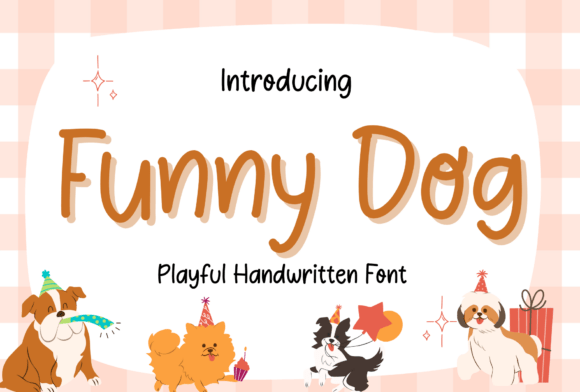
That is where Funny Dog comes in. It is a hand-drawn, cartoonish Script Amp font with an unmistakable personality. It does not take itself too seriously, and that is precisely why it works so well for small business owners who want their brand to feel warm, genuine, and approachable. The letters bounce slightly. The strokes feel natural. There is an imperfect, sketch-like quality to the shapes that makes every word look like it was written by hand. For entrepreneurs building a brand from scratch, that kind of organic charm is worth its weight in gold.
What Makes Funny Dog Stand Out as a Branding Font
Funny Dog is part of the Script Amp category, which means it carries the expressive, flowing qualities of a script font but with amplified personality and weight. Unlike formal script fonts that mimic calligraphy or wedding invitation lettering, this typeface leans into a playful, almost comic-book energy. The letters are rounded and friendly. The baseline is slightly uneven, which adds to the hand-drawn feel. It reads like something you might find on a chalkboard outside a neighborhood café or stamped onto a paper bag from a local bakery.
For a small business, that matters. Customers make split-second judgments about your brand based on visual cues. A font that feels stiff or generic can make your products feel mass-produced, even if you pour hours of care into every order. A font like Funny Dog signals that your brand is human. There is a person behind the product. That emotional connection can be the difference between a one-time sale and a loyal customer who remembers your name.
Where Funny Dog Shines in Everyday Business Materials
The practical uses for Funny Dog stretch across nearly every customer touchpoint a small business has. I have tested it on labels, digital ads, and packaging mockups, and it consistently adds personality without overwhelming the design.
Product Labels and Packaging Design
Small product labels benefit enormously from a display font like Funny Dog. Whether you sell handmade soap, small-batch hot sauce, or artisan coffee beans, the product name needs to stand out at a glance. Funny Dog works beautifully as a headline typeface on jar labels, candle vessels, and hang tags. Its hand-drawn quality pairs naturally with kraft paper, textured cardstock, and simple color palettes. The font does the heavy lifting, so your label design can stay clean and minimal while still feeling full of life.
Menus, Flyers, and Printed Signage
If you run a café, bakery, or food truck, you know how important readable yet charming menus are. Funny Dog excels on menu headers, section dividers, and daily special boards. Its handwritten font style makes printed materials feel less corporate and more personal. A sandwich board outside your shop with "Fresh Today" written in a playful typeface stops more foot traffic than a plain sans serif ever could. The same goes for flyers promoting weekend markets, pop-up shops, or seasonal sales. Funny Dog grabs attention without shouting.
Social Media Graphics and Digital Content
Instagram posts, Pinterest graphics, Facebook event covers, and TikTok thumbnails all compete for attention in crowded feeds. Creative font choices can make your content pause the scroll. Funny Dog works well as an accent font on quote graphics, announcement posts, and promotional overlays. When layered over product photography or lifestyle images, it adds a lighthearted, human touch that stock fonts rarely achieve. For service providers like coaches, consultants, and online educators, this typeface can bring warmth to digital workbooks, webinar slides, and email headers without making them look unprofessional.
Thank-You Cards, Stickers, and Unboxing Moments
The unboxing experience has become a quiet but powerful marketing channel for small brands. When someone opens a package and finds a handwritten-style thank-you note, sticker, or tissue paper stamped with a friendly typeface, it leaves an impression. Funny Dog is practically built for these moments. Use it on circular sticker designs, postcard inserts, or even stamped directly onto shipping boxes. The font's quirky charm turns functional packaging into a memorable brand experience.
Website Banners, Shop Headers, and Email Graphics
For online sellers on platforms like Etsy, Shopify, or Squarespace, a consistent typeface across your shop banner, product thumbnail designs, and promotional emails helps build a recognizable brand identity. Funny Dog works well as a heading font on homepage hero images, sale announcements, and collection page headers. Because it is so distinctive, customers begin to associate that playful lettering with your brand over time. Recognition builds trust, and trust builds repeat sales.
Why Font Consistency Matters More Than You Think
Many small business owners treat fonts as an afterthought. They use one font on their website, another on their packaging, and whatever comes preloaded in Canva for social media posts. The result is a brand that looks fragmented. Customers might not consciously notice the inconsistency, but they feel it. Something seems slightly off, slightly less professional, slightly harder to remember.
Choosing a premium font like Funny Dog and using it deliberately across your touchpoints solves that problem. Even if you are not a designer, sticking to one or two fonts across all your materials creates a visual thread that ties everything together. Your Instagram graphic feels connected to your product label. Your label feels connected to your thank-you card. Your thank-you card connects back to your website. That coherence is what makes a small brand look established and trustworthy, even if it is run by one person working from a kitchen table.
When to Use Funny Dog as a Headline or Accent Typeface
Funny Dog is at its best when used as a display font or headline typeface. Its expressive, bouncy letterforms are designed to make an impact in short bursts. Product names, brand taglines, promotional banners, and section headers are ideal applications. The font holds up well at larger sizes, where its hand-drawn details can be fully appreciated.
For longer blocks of text—product descriptions, ingredient lists, shipping policies, blog posts—it is smarter to pair Funny Dog with a clean sans serif font or a simple serif font that handles paragraph readability better. A structured sans serif like Inter, Open Sans, or Montserrat balances the playfulness of Funny Dog nicely. A readable serif like Lora or Merriweather adds a touch of warmth without competing for attention. The result is a font pairing that feels intentional and professional, not chaotic.
Real-World Brand Examples Using a Playful Script Font
Let me paint a picture of how this works in practice. Imagine you run a small bakery specializing in decorated sugar cookies. Your brand voice is cheerful, warm, and slightly nostalgic. You use Funny Dog for your bakery name on the storefront window, your cookie box labels, and your website header. Paired with a clean sans serif for ingredient lists and order forms, the brand feels cohesive and instantly recognizable. Customers post photos of your packaging on social media because it looks distinctive. The font becomes part of your brand's visual signature.
Another scenario: a beauty product maker selling small-batch lip balms and face mists. She uses Funny Dog on her product labels for the scent names and key phrases like "made with love" or "small batch." The hand-drawn style softens the packaging and makes it feel more personal than sleek, minimalist beauty brands. That differentiation attracts customers looking for something human-made and thoughtful. Again, the font does real business work, communicating values without words.
Coaches, consultants, and service providers can also benefit. A life coach might use Funny Dog on workbook covers, social media quote cards, and digital download templates. The modern typography feels fresh without being childish. It invites the viewer in, lowering the emotional barrier that polished corporate design sometimes creates. For client-facing materials, that approachability is a genuine asset.
Readability Considerations for Real Business Settings
No font choice matters if your customers cannot read it. Funny Dog performs well at medium to large sizes on printed materials and screens. On small phone screens, short headlines and single words remain legible. However, I strongly recommend testing the font at real-world sizes before committing to it across your entire brand. Print a sample label, view it on your own mobile device, check how it looks on textured paper versus glossy stock, and see how it renders in different browsers if you are using it on a website.
For very small text—like ingredient lists, legal copy, or website body text under 14 pixels—switch to a more readable supporting font. That is not a limitation of Funny Dog. It is simply how display fonts are designed to be used. Think of it like a bold headline on a newspaper. The headline grabs you. The body text keeps you reading. Both have distinct jobs.
Testing Funny Dog Before Committing to a Full Brand Rollout
One of the smartest things you can do as a business owner is to test a font in a few real-world applications before investing in full packaging runs or website redesigns. Start with one item: a social media post, a single product label variation, or a new thank-you card design. See how customers respond. Notice whether the font feels like a natural extension of your brand voice or whether it fights against it. Small experiments prevent expensive do-overs.
Many Fonts in the Script Amp category, including Funny Dog, benefit from being tested across both print and digital contexts. What looks great on a paper label might need slight size adjustments for a website banner. Taking the time to test and refine is what separates brands that look polished from brands that look thrown together.
Licensing Considerations for Small Business Owners
Before you stamp Funny Dog onto product packaging, merchandise, or digital template downloads you plan to sell, check the commercial font licensing terms carefully. Different font marketplaces have different rules. Some allow unlimited commercial use. Others require an extended license for physical products or digital goods sold to customers. Licensing affects whether you can use a premium font on candle labels you sell, e-book covers you distribute, or client work you deliver. Taking five minutes to confirm the licensing details protects your business from legal headaches later.
Building a Brand That Feels Like a Person, Not a Corporation
Small businesses win by being human. Big brands spend millions trying to feel approachable. You already are approachable. The right typeface simply lets that truth come through in your visual identity. Funny Dog carries a specific emotional tone. It is playful but not immature. Quirky but not chaotic. Friendly but not forced. For a business owner shaping a brand around handmade goods, personal services, or community-focused offerings, that tone aligns beautifully with what customers are actually searching for: something real.
I have watched my own small brand transform simply by being consistent with a font that matches my voice. The feedback from customers changed. People started tagging my packaging on Instagram without being asked. Wholesale buyers commented on how professional my line looked at trade shows. None of that came from a massive design budget. It came from treating design assets like font choices as strategic business decisions, not afterthoughts.
Funny Dog does not solve every branding challenge. No single font does. But if what your small business needs is a cohesive, personality-rich typeface that makes every customer touchpoint feel warmer, more consistent, and more memorable, then this one deserves a serious look. Try it on your next label. Drop it into a social graphic. See how it shifts the mood of your brand materials. Sometimes one smart font decision is all it takes to pull everything together.